31 Dec 2006

Casey Station


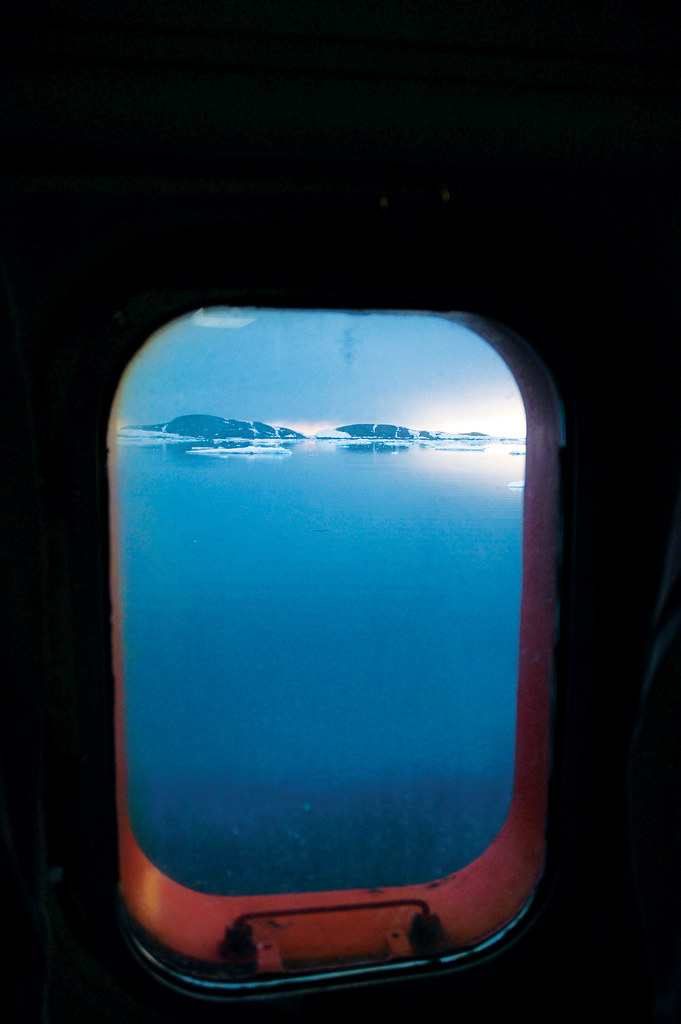
After spending some more time on the open ocean, it was exciting to have the continent just outside my porthole again. Even though I had been to Davis Station only five days earlier, it was still striking to travel for days across a wilderness of ocean and ice, and then see people emerging from buildings on the horizon. By 8:00 am, the station leader and a small team were onboard to brief us. The first of the new expeditioners were sent ashore to prepare for thecargo operations ahead. This time, my trip to land was in a small boat called a Pagodroma.
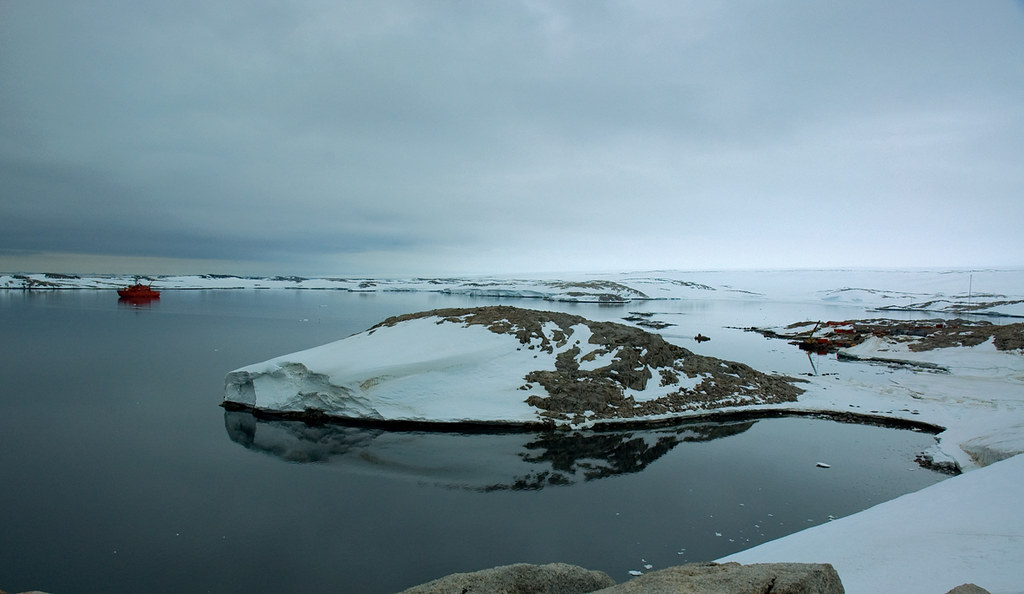

Casey is located on the coast of Wilkes Land, in a wildlife rich area of low rocky islands and peninsulas. During summer — when the station’s population more than doubles — the temperature occasionally rises above freezing. In winter, when the sea freezes over, it’s a different story for the 20 or so winterers, who regularly experience temperatures into the minus twenties and thirties! Not even the most powerful ships can reach them until the sea ice begins to break up again in the spring. Just like the emperor penguins on the ice in the dark — a little group in a very cold place — the station’s winterers are cut off from the rest of the world.

Meal times in Antarctica bring people together. Thanks to hydroponics, you can even expect fresh greens.
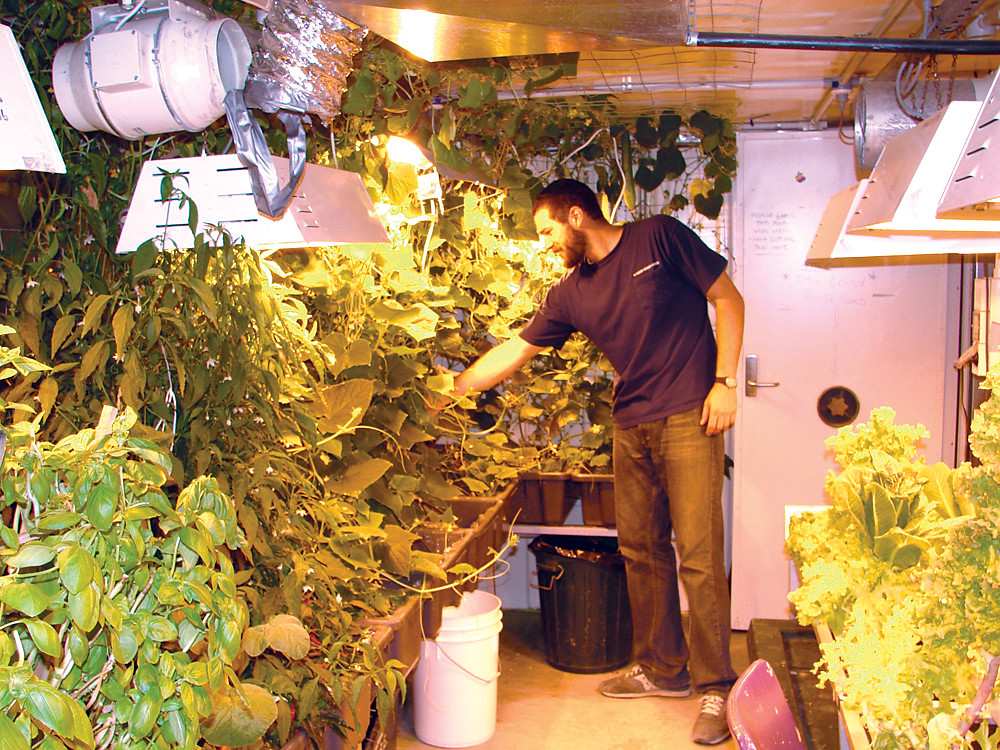
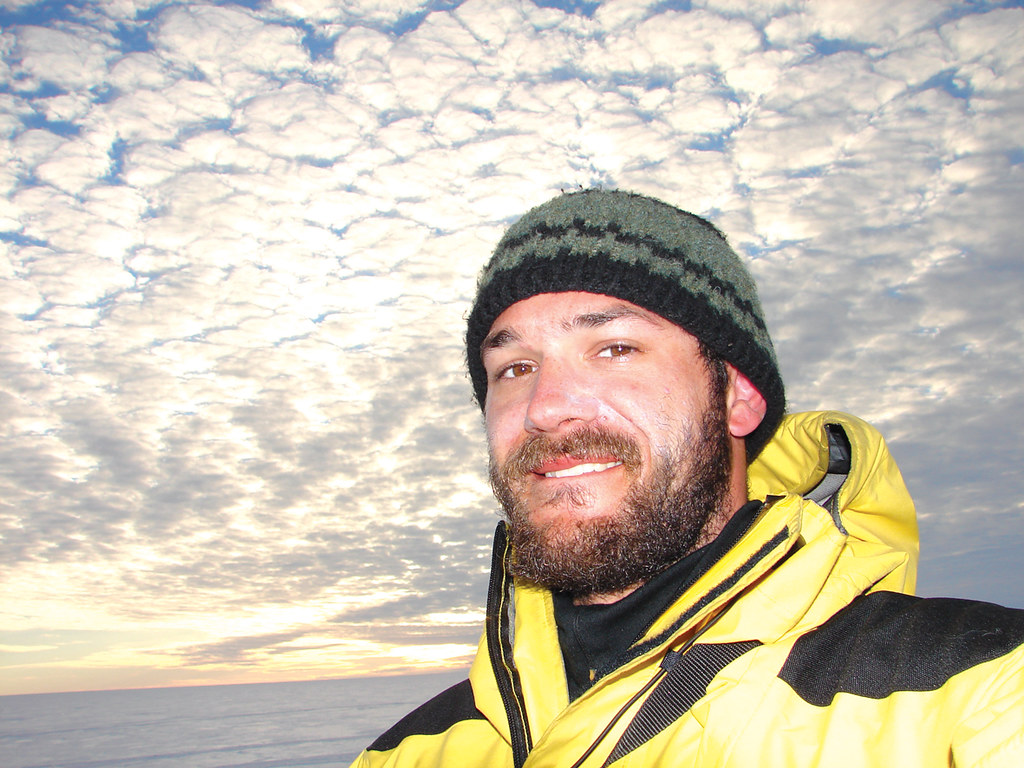
“Because there are no insects around, we have to pollinate the cucumber flowers with a small paintbrush. It’s enjoyable work and it’s great to see everyone pile the fresh greens onto their plates at lunchtime.” Jim Behrens

28 Dec 2006

Big day out

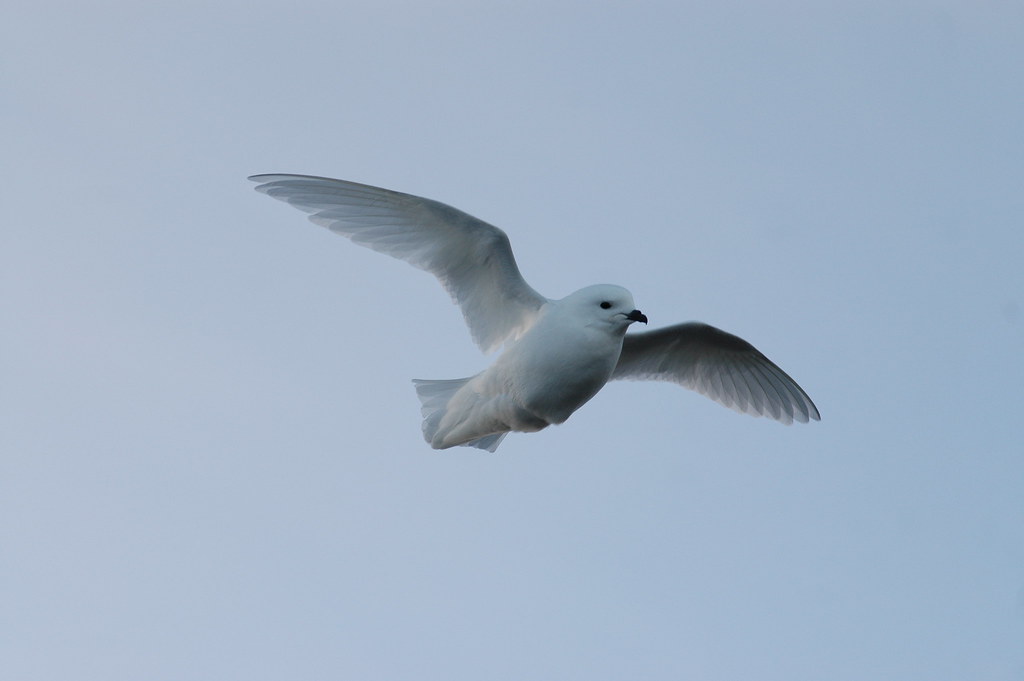
We have been ‘driving’ parallel to the continent. Even though the temperatures are just above freezing, it feels like summer, and most of us have stripped down to one layer of clothing. The fog has cleared, and I can’t believe I am bathing in sunshine and blue sky on the bright red deck of the Aurora, with Antarctica as my background! As if to celebrate the occasion, snow petrels circled above as Adeliepenguins dived off their floating ice lounge rooms, out of the Aurora’s path and into the dark waters of the bay. Later, I saw my first emperor penguin standing alone on an ice floe. What a shock the huge, humming, bright-red steel mass of the Aurora must be to these creatures.

27 Dec 2006

Iceberg alley


Goodbye Davis


This morning, I was woken up by the familiar crunching sounds as we nudged our way through the pack ice off Davis Station. After five days on the continent, I’m back on the Aurora and heading towards Casey Station. Amid last-minute packing and interviews, an at-times teary ceremony was held for the outgoing winterers, and thestation was formally handed over to the ‘new crew’. I tried to imagine what it would be like to leave a place that you have called home for the past year, knowing that you’ll probably never see it again.

This afternoon, a group of Arctic terns swept over the bow and away into the fog that now blankets
the ship. Icebergs, storeys high, suddenly came in and out of view,and penguin tracks on the ice floes
added to the mysterious feeling.

Casey is situated in an area of the low rocky Windmill Islands and peninsulas. With more than more than 50 islands in the group, the Windmill Islands are home to tens of thousands of birds, including Adelie penguins, giant petrels, skuas and snow petrels. I can’t wait!


I am travelling on Voyage 2. You can find information about other Australian Antarctic voyages for the current season here.

26 Dec 2006

Interview: Jim Behrens - The loose tooth


Back at Davis station, I met Jim Behrens. Jim says his job as a scientist has made his life an adventure.
He works for the Scripps Institute of Oceanography in California, and is trying to discover how Antarctica will respond to a warmer world.

I love all the weird and wonderful things I get to do, whether it’s spending a few days hanging out with a group of elephant seals, flying in a helicopter parallel to a giant crevasse, or pooping in a bucket
on an Antarctic ice shelf! (There’s no plumbing on ice shelves — you sit on a metal bucket outside,
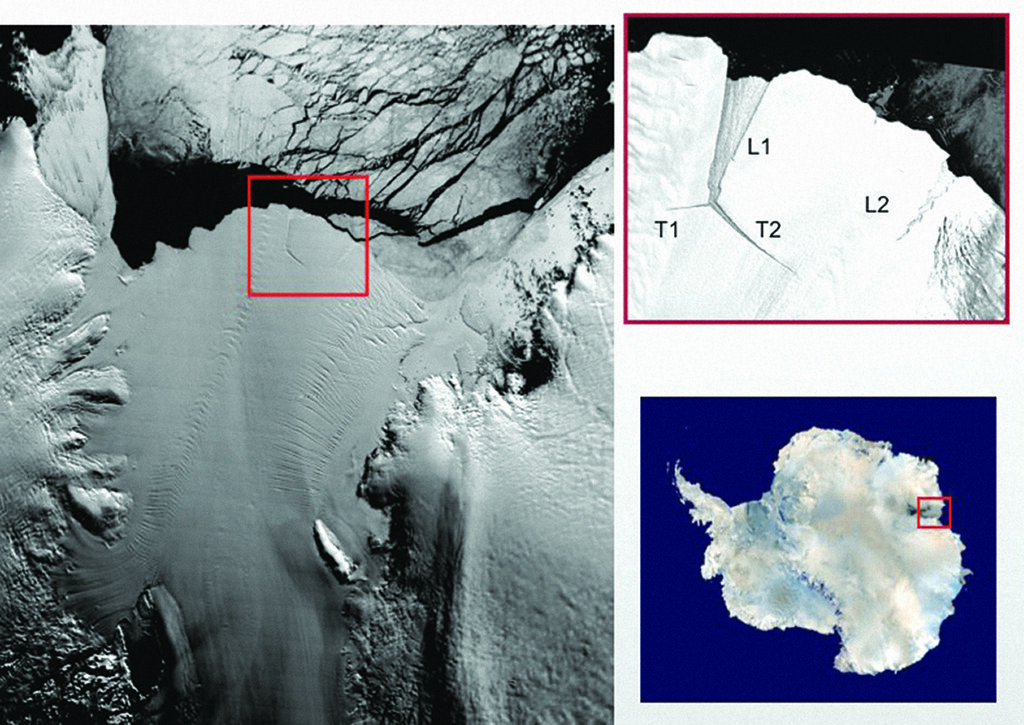
exposed to the elements, with the wind whipping around you. It’s very scenic, but you do end up with an extremely cold bum!) I’m studying the ‘loose tooth’, an area on the edge of the Amery Ice Shelf
where a large iceberg is calving off.


The ‘loose tooth’ (seen here from space) is an area at the northern edge of the Amery ice shelf where
a large iceberg is calving off.


At the start of the summer, we set up GPS receivers and a type of sensor called a seismometer at the rift (the crack where the ice is breaking away). Seismometers detect vibrations — they are most often used to measure the ground motion that occurs during earthquakes. Here, they ‘listen’ to the ‘icequakes’ that occur near the rift tip as it cracks its way forward. At the end of the summer, we retrieve the seismometers and use computer programs to process the data we’ve
collected.

We want to learn about the rate at which iceberg calving occurs, and how it’s affected by the temperature and motion of the ocean and atmosphere. Then, we’ll understand more about how the Earth’s changing climate will affect the Antarctic icecap in the future.

24 Dec 2006

White wilderness

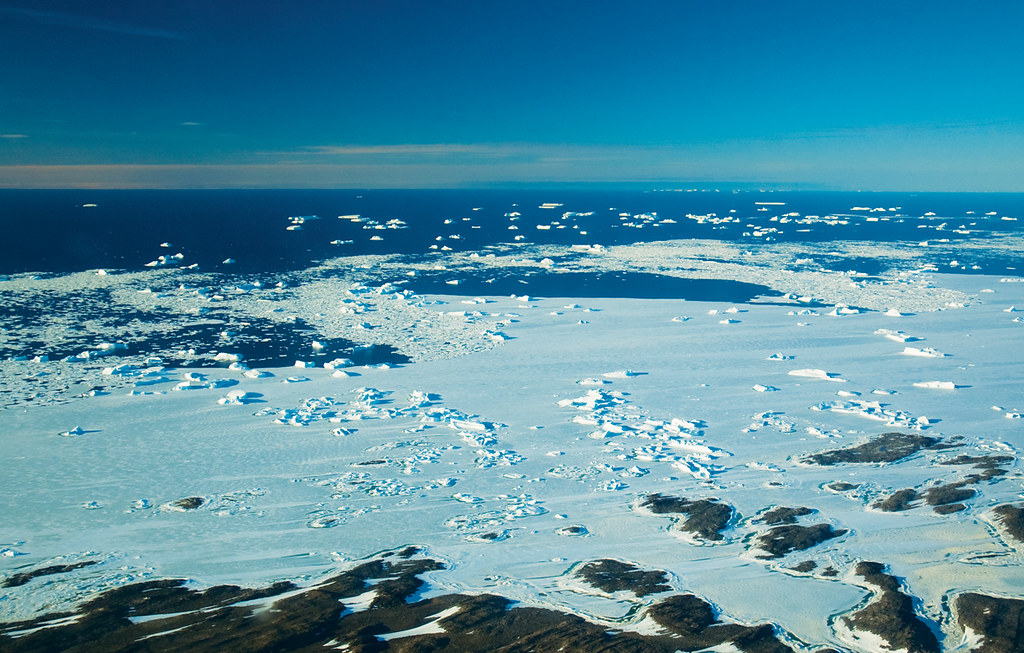
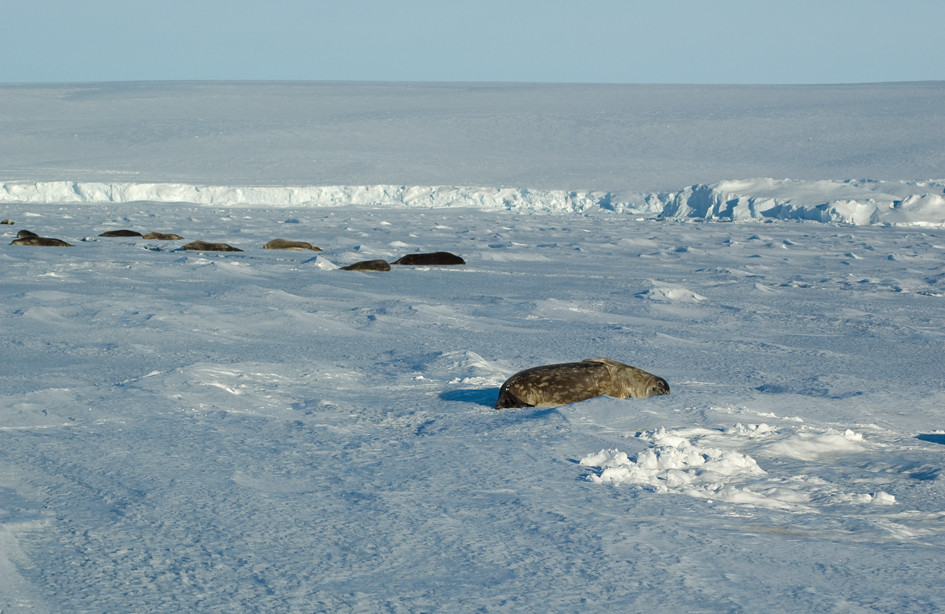
Last night, we flew along the coast from Davis Station to visit a Weddell seal colony. The time of day (about 9:00 pm), the pristine atmosphere, and the loops our pilot made across the shimmering ice landscape beneath us made for a spectacular flight.

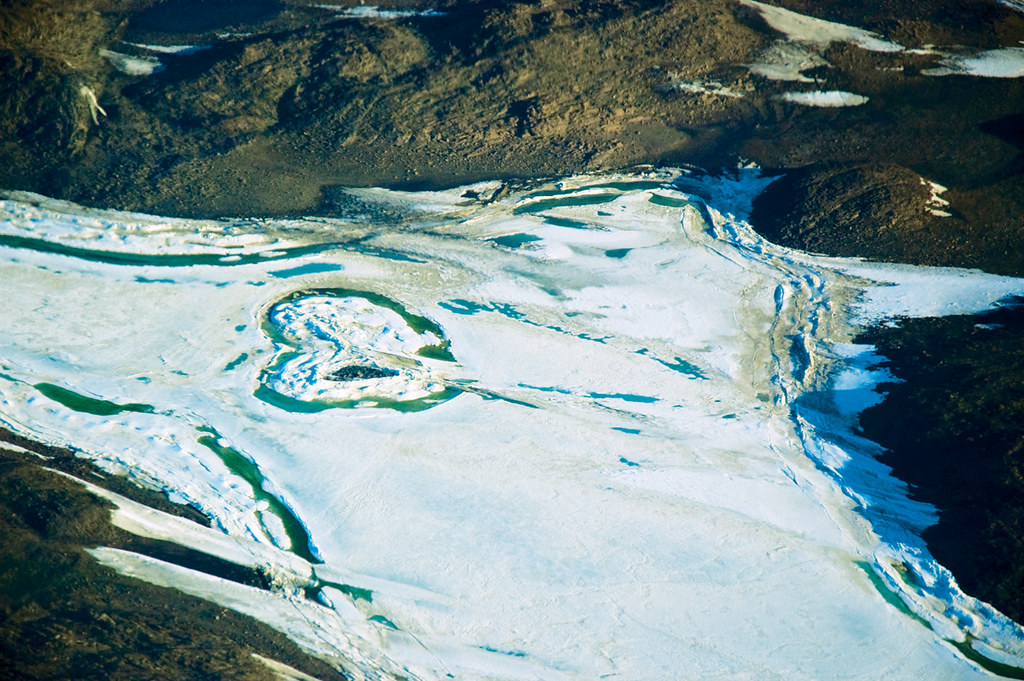
This was my first glimpse of massive tabular icebergs grounded along the coastline. They shimmered like clouds on the clear turquoise blue of the Southern Ocean, and crystal blue lakes formed circular patterns on the ice plateau, like jewels set in a giant meringue.


When we arrived, about 30 Weddell seals were lying around on the seal. I felt fortunate to stare into the eyes of a wild animal — in this case, a very sleepy Weddell seal in its natural habitat.

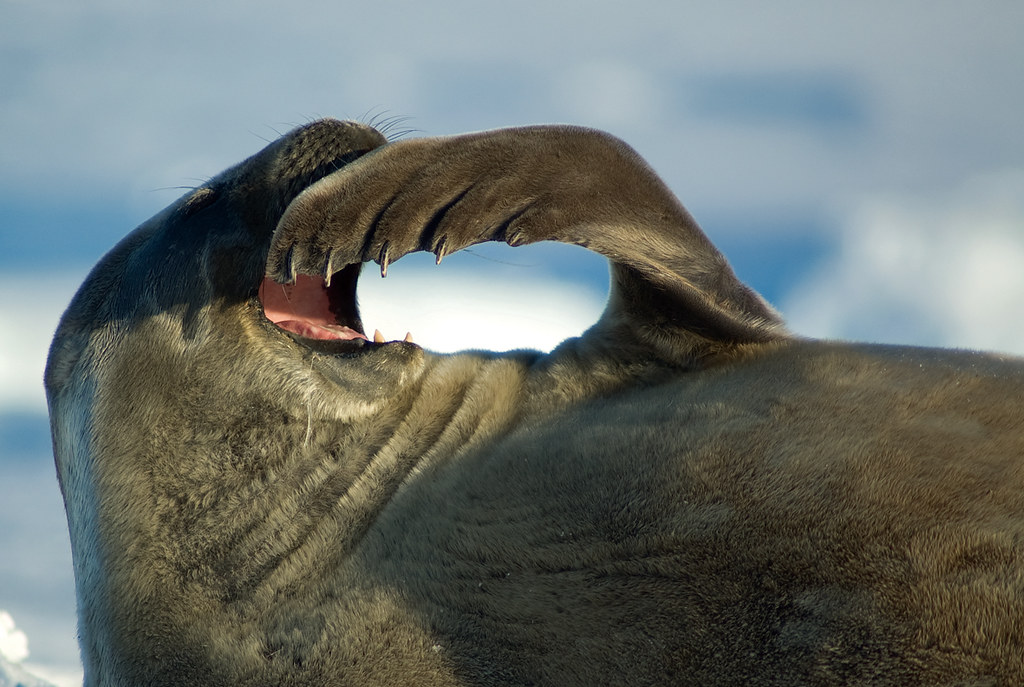
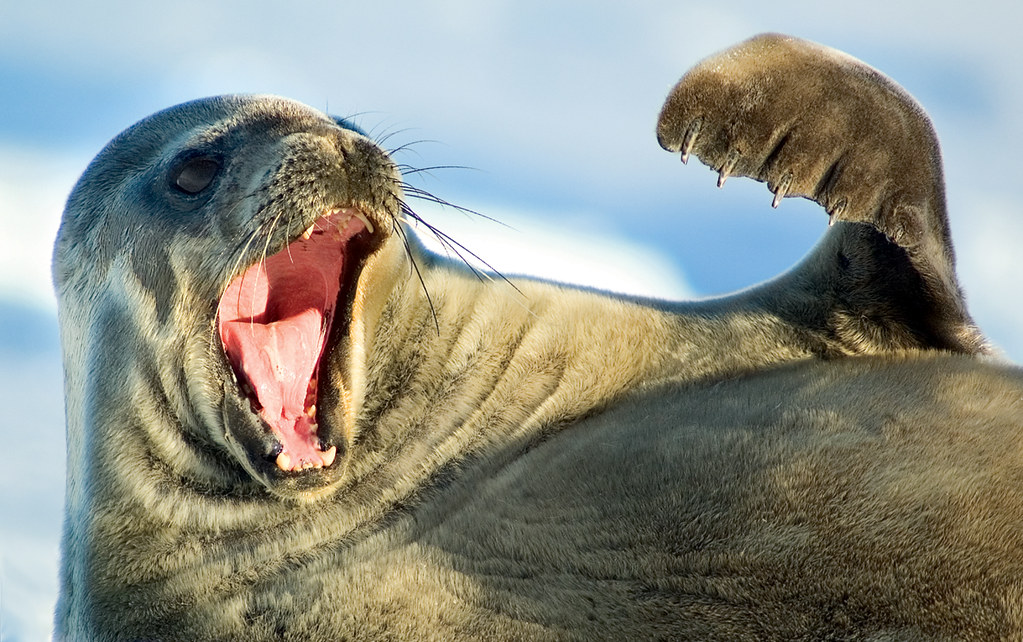
While we gazed in wonder, filmed and photographed, the Weddell’s occasionally arched their fins, scratched their bellies and yawned a lot! We weren’t sleepy yet, but at about 11.30 our pilot, Ricardo was back in the helicopter to take us on to Watt’s hut for the night.


Interview: Judy Horsburgh - Seal sounds


Don’t be fooled by the drool. Weddell seals are excellent communicators.

One of the things that has made me smile the most in Antarctica is the noise that Weddell seal pups make when they are communicating with their mothers. Seals use sound to help them find their way around, hunt and communicate. Their sense of sight and smell is reduced underwater, so seals (and other marine mammals) use sonar, and their whiskers act as a kind of radar receiver!

23 Dec 2006

A bright bivy

Last night, I slept outside Watts Lake Hut in the Vestfold Hills. This photo of the hut was taken from inside my bivvy bag at 1:00 am! In December, the Antarctic sky is filled with daylight 24 hours a day. The Sun moves across the sky, just above the horizon, but never sets.


The seaward half of the Vestfold Hills, where the hut is located, does not get any of the powerful katabatic winds that come down off the Antarctic plateau, so I was super-toasty inside my bivvy bag. The night was perfectly still, and away from the station and its generators I experienced the silence of Antarctica for the first time.


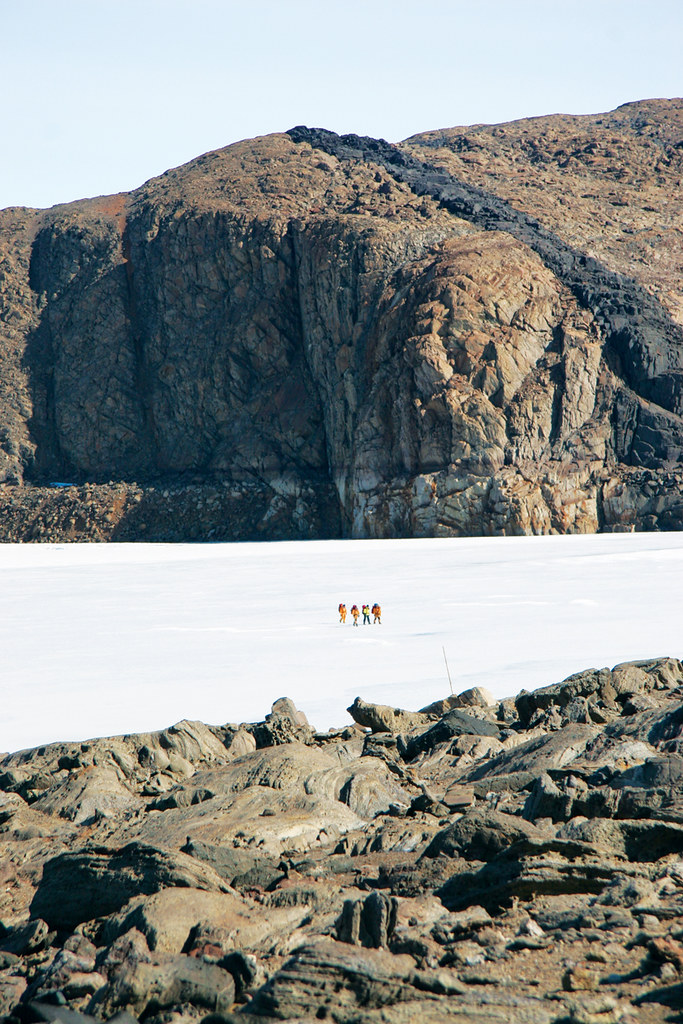
This morning, I joined scientist Antek Skotnicki on one of his moss collecting trips. Before we set off, we drilled a hole into the surface of a frozen lake to make sure that it was safe to travel on. You can also get an idea of the condition of the ice by looking at it: thin ice is most often dark or grey.
Antek says the beauty of molecular science is that you only need to take tiny samples. I understand why this is important when Antek tells me that Antarctic moss grows at a rate of only 1 mm per year. A single careless footprint in the moss could remain there for many years, so I tread carefully!

Antek’s wife, Mary, a molecular biologist, will compare moss DNA from the samples Antek collects in
Antarctica to moss from South America and Tasmania. This may help her work out where the moss came from and perhaps when. Scientists believe that plants living in extreme environments like Antarctica may also provide an indication of how plants elsewhere may respond to climate change.


Carrying our 20 kg survival packs, we meandered through the hills, crunched across frozen lakes and slid down icy slopes in search of moss. It was fantastic work!

Finding my 'land legs'


I felt a bit strange when I woke up this morning after my first night on land after 12 days of rocking and rolling on the Southern Ocean. I guess I have to find my ‘land legs’ again.

'Hurry up and wait'. That‘s the saying down here when you are getting ready to go somewhere and especially so when you are traveling by helicopter.

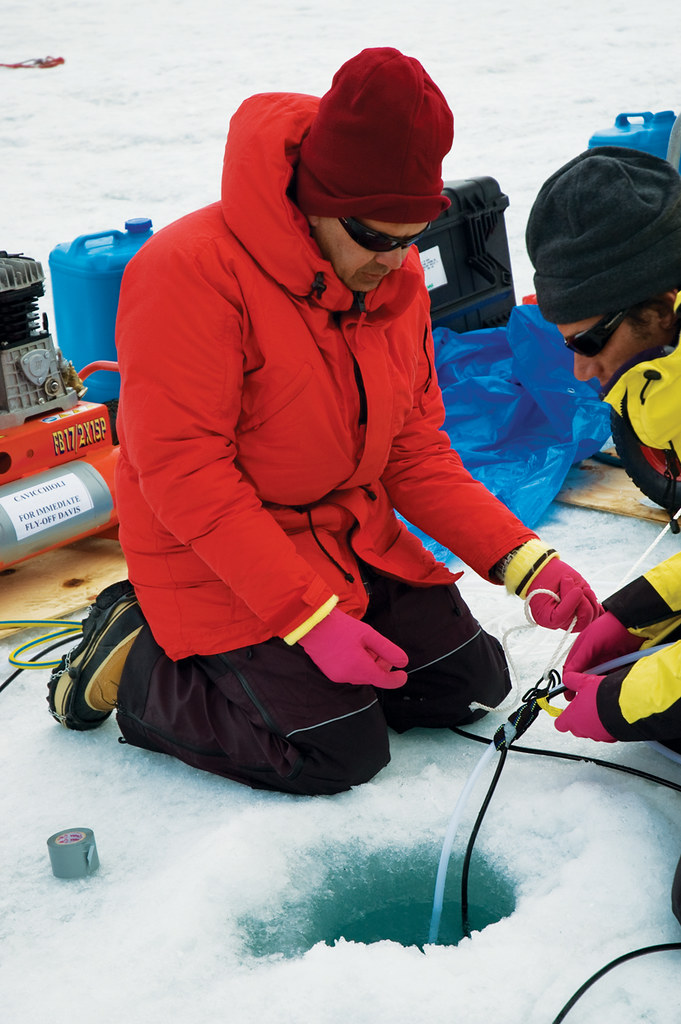
There’s lots of science research happening around Davis. Today, we flew out to Ace Lake in the Vestfold Hills to interview a team of scientists who are living and working there for the next week. Ricardo, our pilot, said that we should attach ice chains to our boots, because we will be landing in the middle of the frozen lake. I have a mild fear of ice, so that was enough to get my attention!


It was an amazing sight to seeto see Rick and his team from the University of NSW and University of Tasmania hard at work in their ‘lab’ — the frozen surface of a lake!

Interview: Rick Cavicchioli - Life in the freezer


The extremophiles we’re studying love life extremely cold. They live at the bottom of Ace Lake, where there is no oxygen and the average temperature is 1°C. In Deep Lake, they live at temperatures as low as –20ºC in water that is 10 times saltier than the ocean. To study them in Ace Lake, we have to drill a small hole 1.7 m deep through the lake’s icy crust to reach them. Then, using a machine that works a bit like a pool filter, we collect the microorganisms on a membrane as the water flows through.
Even though they’re really small, cold-adapted extremophiles are vital to the health of our whole planet. Most of the Earth’s biosphere, such as the deep ocean and alpine and polar habitats, is cold (less than 5°C).

Someone actually said: “If the last whale swallowed the last panda, it would be a disaster, but it wouldn’t be the end of the world; however, if we destroyed some of the key microorganisms, it could completely prevent the normal cycles of life occurring.” If we can understand the microorganisms here and how they function, what kind of processes they drive and how they affect the atmosphere and the cycling of nutrients, then we’ll have a much better picture of many of the other cold environments on Earth.

But, working out what they do is not just a scientific question. Extremophiles could also be put to good use. Understanding more about their genetic make-up could help in the development of a variety of new technologies. Imagine being able to wash clothes or dishes without using hot water or only tiny amounts of detergent. Because these Antarctic microorganisms are already adapted to the cold, we can use them to develop useful products such as enzymes — like those in cleaning products. These enzymes do not pollute theenvironment, and can therefore replace the more harmful chemicals that are in many detergents.

20 Dec 2006

Touchdown Antarctica


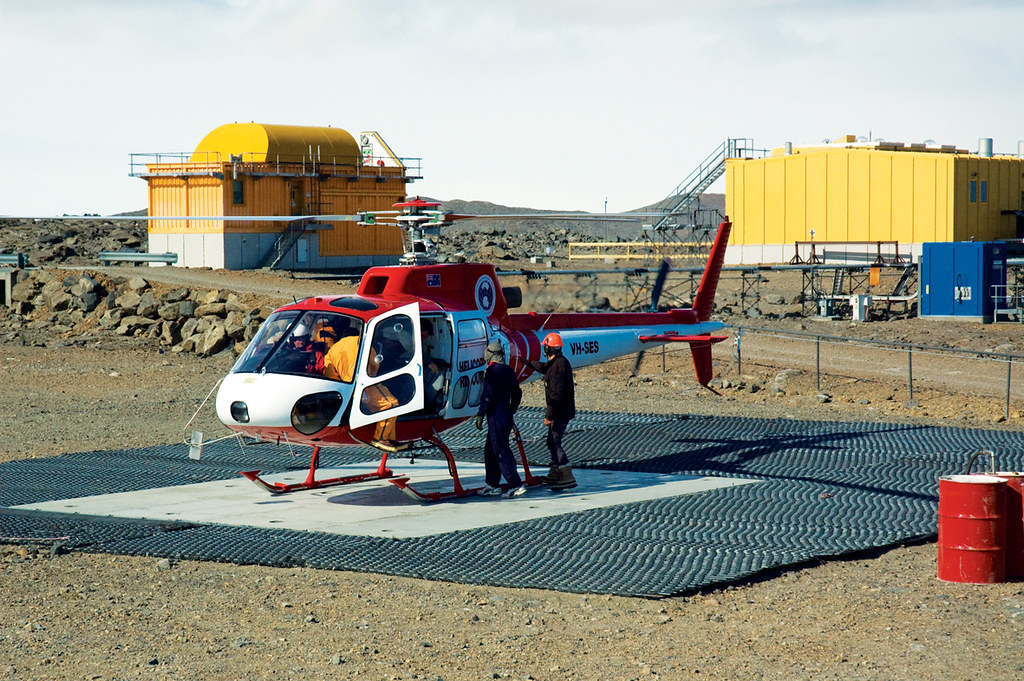
My first step on Antarctica was not quite what I had expected. The landscape around Davis Station looks a bit like the Moon: not much ice, and lots of rock.


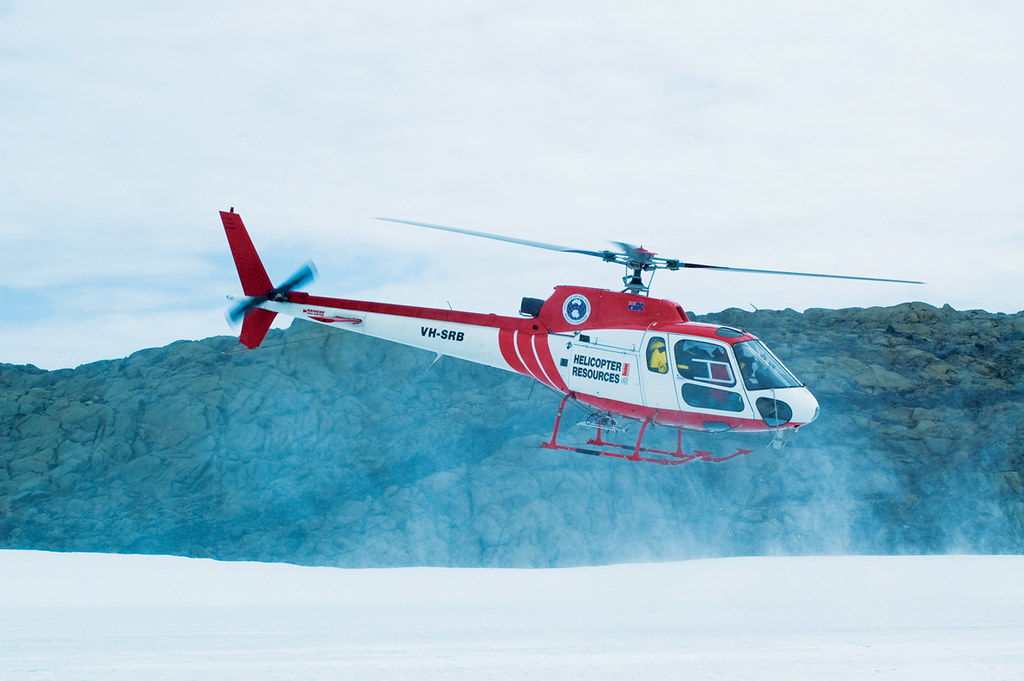
In Antarctica, helicopters are like taxis. During summer, the ice melts and is too weak to travel on, so a short flight is the safest way to get to the mainland. By 9:30 am, everyone was hard at work. The ship was bustling with activity as we readied for the fly off.

Could you spend a year away from your family and friends? At the station, we were greeted by the men and women who had been living there for the past year. It was great to meet them and hear about
some of their experiences. But, I suspect that for them, the highlight of our arrival was the delivery of mail and Christmas presents from back home. Imagine the shock of spending 10 months over winter with just 20 people, then all of a sudden having 100 new faces to deal with!


While I’m in Antarctica I will be spending time with the other Antarctic fellows - Wes Dening, Marie Davies from Totally Wild and Vonna, our field guide from the Australian Government Antarctic Division.
Wes was totally excited to be off the boat.

19 Dec 2006

Interview: Frederique Olivier - Finding which nest is best


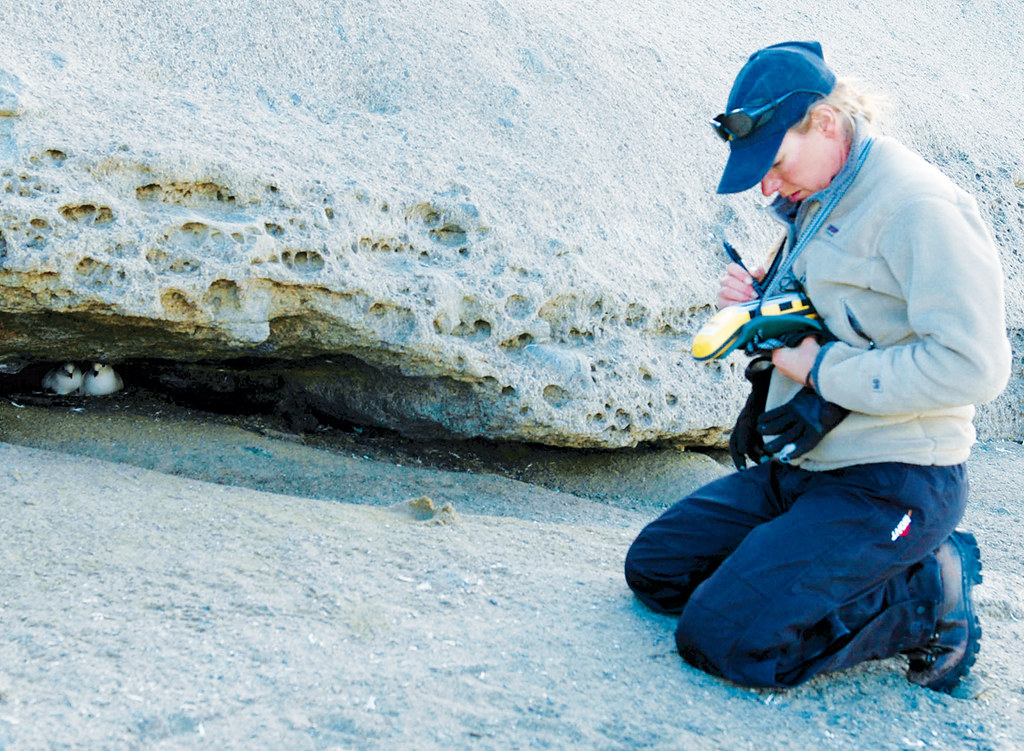
I wanted to know why snow petrels nest in certain places and not in others. So, I spent six months scrambling down hills around Casey Station looking for snow petrel nests. I recorded their exact
location using a Global Positioning System (GPS) and collected information about the environment around the nest. It turns out that snow petrels choose very peculiar places to nest. You might think being surrounded by snow would make you feel cold, but it is the exact opposite for snow petrels. Sometimes, these birds use snow as an insulation material — in the same way that mountaineers dig snow caves to protect themselves for the night. They actually try to keep a little bit of snow inside
their nest cavities to build walls around them, because it protects them from the wind and maintains some heat in the nest.

Because Antarctica is so big, no one can visit every single rocky area along the coast to count snow petrels in the field. So, I used computer modelling software to work out where the birds might be nesting elsewhere. Then I had to test my predictions. After two years, I got the chance to go to Antarctica again and see if my computer work was reflecting what actually happens. I found that the computer analysis could predict where the snow petrels were nesting at Mawson. I was very happy, because my models worked!

It’s likely that my models can be applied to other unsurveyed areas of East Antarctica and to other species. By understanding the relationships between species and their environment, we can better predict the impact of climate change on these habitats.

Pure white snow petrels


Snow petrels, the subject of Frederique Olivier's three-year-long study, live amongst the pack ice during Antarctica's harsh winter. Image: Frederique Olivier


The ocean is much calmer now that we are in the sheltered waters of the pack ice. I almost miss the rough and tumble of the open water. I’m sure some of the seasickness victims would disagree with me!
Today, I talked with Dr Frederique Olivier while the Aurora was crunching its way through pack
ice. The site of our interview — 60° south, snow petrel territory — is fitting. Fred’s main research interest is studying the nesting sites of these pure white birds that look like pieces of ice come to life.

18 Dec 2006

Icebreaking


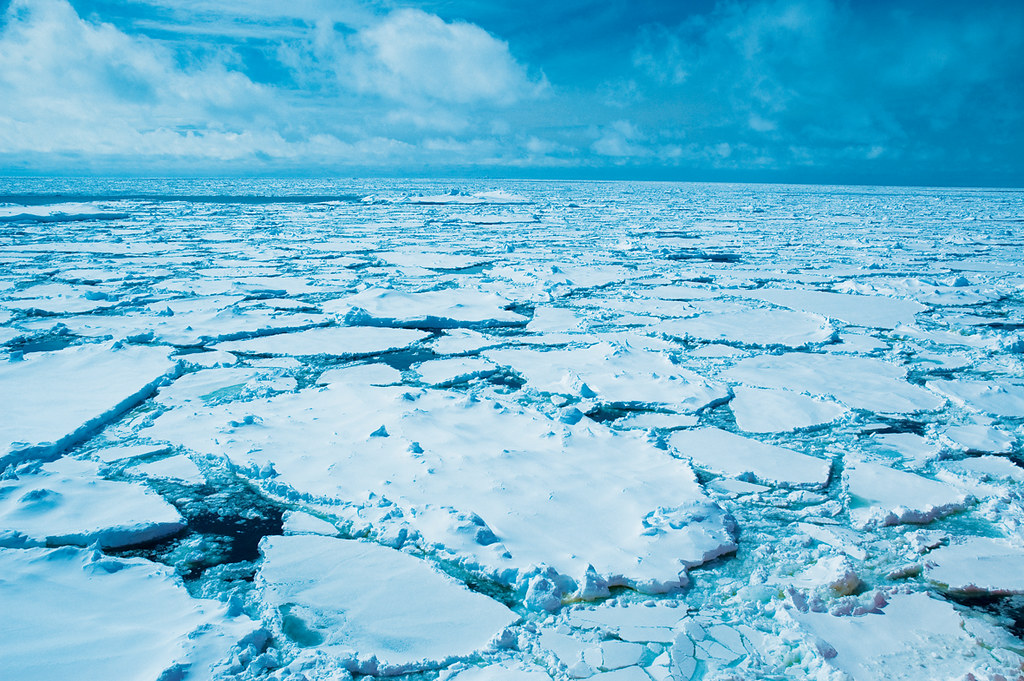
Ice is all around us now. No words or photographs can describe the feeling of being surrounded by ice as far as the eye can see. The ocean appears darker now against the whiteness of the pack ice, and
at times there is more ice than ocean. The ice forms every winter when the surface waters freeze and spread out from Antarctica. In summer, it breaks up into big, flat pieces called ‘floes’ that look a bit like a giant white jigsaw puzzle. Our first stop is not far away: Australia’s Davis Station (68°35’S, 77°58’E), almost 5000 km from Hobart.

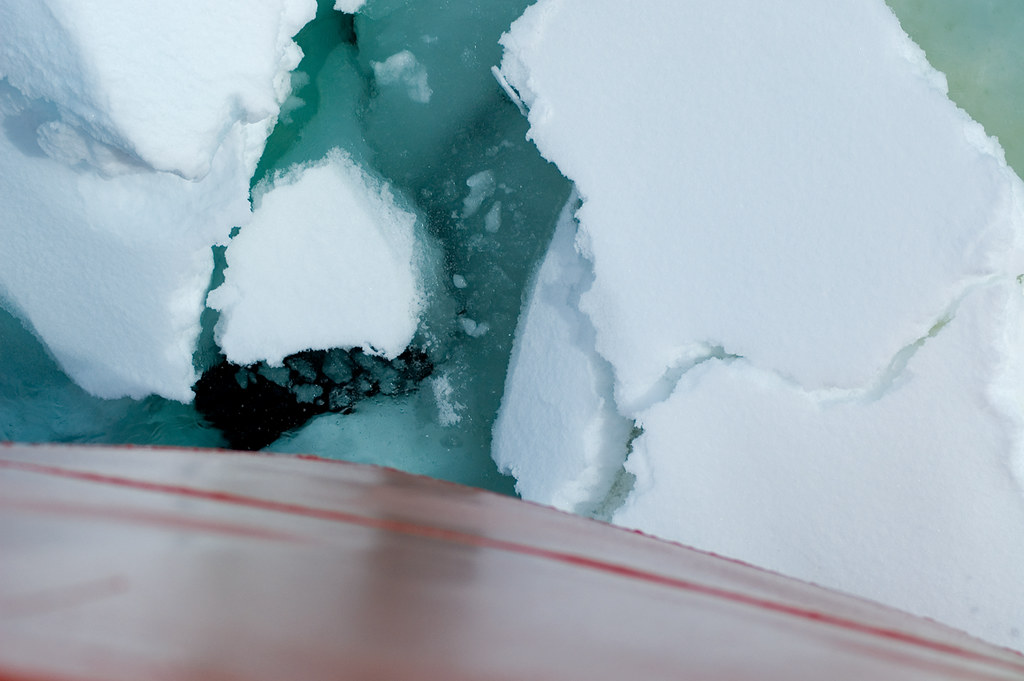
 CR_unch! Although the Aurora is an icebreaker, it can still be quite tricky to travel through the ice. The fastest way through is by following the water leads or cracks between the ice floes. Sometimes, we have no choice but to slow down and break through the ice. When we hit a big piece, the ship bangs and shudders as the bow pushes up on top of the ice. The weight of the ship then cracks the ice and we move through. When this happens, the place to be is right at the front of the ship, where you can
see the cracking and hear and feel the crunching!
 

17 Dec 2006

Monsters of the deep


We passed through 60 degrees south of the equator yesterday — official Antarctic waters according to maritime law.

Only one iceberg on my shift last night, but today, icebergs are everywhere.

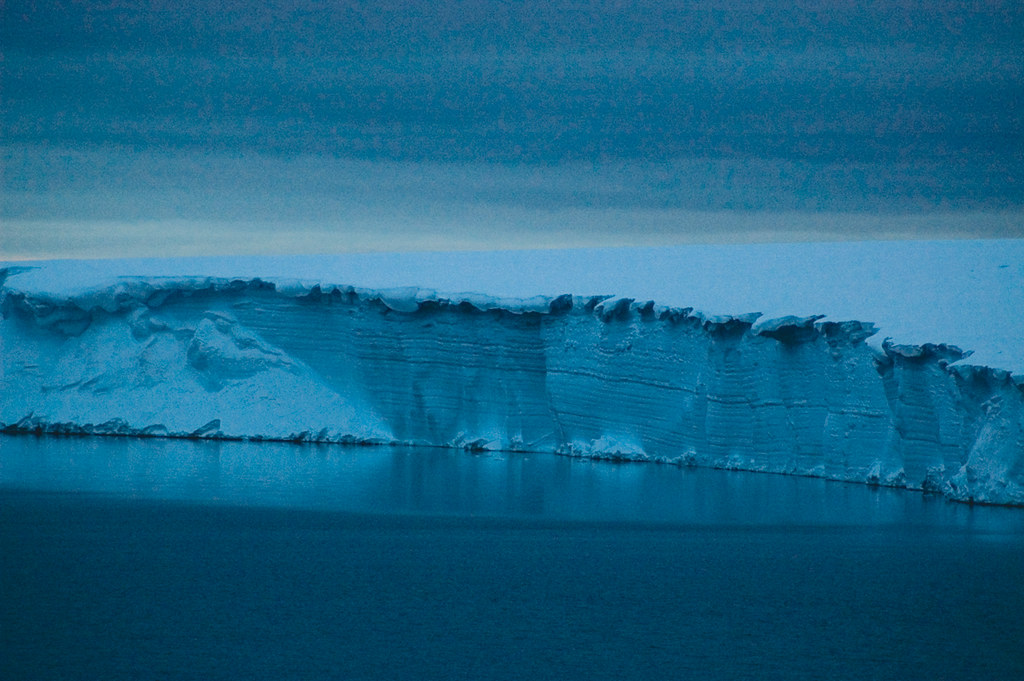
Some of them are several kilometres long, in all shapes and sizes. A few look like floating castles; others look like bits of paper that have been screwed up and thrown at the horizon.

The biggest bergs are called tabular icebergs. They are flat on top with cliffs of about 30m high. Tabular bergs are big chunks of ice that have broken off floating glaciers around the coast of Antarctica. When glaciers (great rivers of moving ice) are pushed forwards they sometimes flow out towards the ocean, creating ice shelves which are attached to the land but float upon the ocean. Eventually, the movement of the glacier and the thrashing of the ocean cause pieces of the floating ice sheet to break off and become icebergs.

I like the ones with beautiful curves. These icebergs have rolled upside down and the curved bits, which used to be underwater, have been shaped and worn smooth by the sea.

The ocean is much calmer now but I miss the sound of the ship heaving through the Southern Ocean. In rough seas the ship sounds a bit like whale sonar and the noise evolves when the waves get really big.

Weeerrrrrrhhhhhhhhheee…the whale has turned into a monster of the deep!

I'm sure some of the sea sickness victims would disagree with my liking for the rough and tumble of the open ocean. Many of them are emerging from their cabins now, looking worn out and still a little green around the gills, to see what all the excitement is about.

Speaking of monsters, our crossing of the 60°south latitude earned us a visit from a cheeky and very green King Neptune last night. All newcomers to this far south must bow before the King and Queen. One of his followers looked suspiciously like Vonna Keller, our field guide in Antarctica, masked and covered in green food dye. I didn't dare to question her identity. I already had plenty of vegemite in my ears...

16 Dec 2006

The twilight zone


This morning, I woke up to flickers of white flying past my porthole, a ship dusted with snow and more icebergs on the horizon. There’s always something happening on the ship, so I was out of bed early again after another late night. It hardly gets dark at all now. A good night’s sleep is a struggle, and so is leaving behind the stunning view of twilight and ice on the Southern Ocean.

Another iceberg was spotted overnight, this time about 8 km away and much bigger than the last one. We are recording the size and location of icebergs every three hours now. The information we record will be passed on to scientists at the University of Tasmania. It’s a great excuse to hang out on the bridge — my favourite place on the Aurora. My first shift is at 3:00 am this morning. I had better get to bed!

14 Dec 2006

Iceberg!


After travelling 1306 km, our first iceberg was spotted a bit before 9:00 am today — causing a rush of people and cameras to the decks. I’ve been thinking about why we were all so excited, and I think it’s because drifting icebergs are like messengers from another world. After so many days at sea, with no land in sight, an iceberg is a sure sign that things are about to change.


You may be wondering why some of my posts are delayed by a day or two. While I'm on the Aurora I can only send irregular emails, as all correspondence is sent via an expensive satellite link to the rest of the world.

13 Dec 2006

Riders on the wind


Last night we were welcomed to the furious fifties (south of latitude 50°S) with some pretty rough weather. The Aurora continues onwards — at only nine knots today, due to the rough seas— creating impressive white plumes of spray over the bow as she takes the tops off passing waves. The days are getting longer; it’s getting dark at about 10:30 pm now. The dropping temperatures add to the feeling that we are heading in the right direction. The wind and waves have not deterred the albatross, however, who seem to accompany us constantly.

12 Dec 2006

Field training begins

Field training started today for the winterers. ‘Round trippers’, like me, start their training tomorrow. So tonight, my Australian Government Antarctic Division (AGAD) field manual is my bedtime reading. In Antarctica this little book, and the AGAD first aid manual, must always be carried with you. Whatever dangerous situation you’re in, it can help you out, provided it’s in your pocket and you have time to read it! It has loads of life saving information, from how to build a snow cave (if you are caught out in bad weather) to how to use your ice axe as a brake system (if you are falling down an icy slope).

Today I also went to a talk by Tim Jarvis. In 1999, Tim became a Joint World Record holder for the fastest unsupported journey to the South Pole (47 days) and the longest unsupported Antarctica journey in history (1580km) with fellow adventurer, Peter Treseder. Tim is journeying south this year to lead an expedition that is retracing Douglas Mawson’s tragic Australian Antarctic expedition of 1911-14.

Mawson was the only member of this three man expedition to survive. Lieutenant Belgrave Ninnis fell to his death down a crevasse, together with the sledge carrying most of their supplies. 506km from their base, Mawson and Dr Xavier Mertz started their journey back, killing their dogs for food. Tragically, Mertz died with 160km to go. It was not discovered until years later that he had been poisoned by Vitamin A from the dogs livers.

Bump, jump and sway


Last night was like trying to sleep on a theme park ride. Up and down, across and around. Bump, jump and sway. Everything and everyone was moving. The massive waves crashing against my cabin’s porthole look like the inside of a washing machine. This morning’s breakfast was poorly attended, with lots of people lying low in their cabins. I’m feeling good and I’m infinitely grateful. We’re 51° 57’ 00” S and 125° 13’ 00” E and 2215 nautical miles from Davis Station, Antarctica.

Maybe it would be easier to fly to Antarctica?


10 Dec 2006

Finding my sea legs


Yesterday I spent nearly the whole day in bed with seasickness. No vomiting, but very sleepy and not hungry at all. Before I left, my dad, an experienced sailor,
told me I should keep my eyes on the horizon and not be afraid. He was right! It’s day two, and I’m beginning to enjoy hanging out on the bridge of the Aurora, watching the bow rise and fall over the swell. So far, I haven’t been seasick, and I could not be more excited.

I’m still getting used to life on the ocean though. I have to be careful on my chair because if I tuck my legs underneath me like I’m used to doing, I can fall backwards when the boat moves with the swell.

Unfortunately the biggest news to date is my cabin – called ‘the swamp’ by those lucky enough not to be living in it. One of the pipes in our bathroom is cracked and water has leaked underneath the carpet in our bedroom. In case you didn’t know, wet carpet smells pretty bad and it’s even worse when you are not feeling so well. Hopefully it’s being fixed as I write this post.

I just spotted an albatross through a porthole soaring above the waves.

Time for a cup of tea and some fresh air.

Into the Southern Ocean


On Friday at 6.00pm the Aurora Australis finally sailed into the sunset, down the Derwent River and around the southern edge of Tasmania into the vast Southern Ocean. No more land, just ocean for as far as you can see.


Some people tested the limits of their mobile receptions, making last minute phone calls to friends and family, others played hacky sack on the helipad at the back of the boat until Tasmania disappeared...

Lots of interesting people are on board — scientists, helicopter pilots, filmmakers, carpenters, plumbers, a doctor and even a polar explorer. Mealtimes are your best chance to meet up with people. I think I’ll start my interviews in a couple of days, once everyone has got their sea legs. Some people are already in bed with seasickness!

Before we sailed, everyone from Voyage 2 attended a briefing from the Australian Antarctic Division’s medical officer Peter Gormly. He told us what can happen, and what has happened, to people in Antarctica. It was a gruesome lecture with pictures of injured bodies and horrible accidents. I think his aim was to shock us into respect and reasonable fear and he definitely succeeded – living up to the nickname of ‘Doctor Death’!

He left us by saying there are three things that you must not forget in Antarctica. “It’s cold, it’s dangerous and please be kind to one another.”

8 Dec 2006

24 hours to go


Glacier glasses and snow goggles - check. Insulated freezer suit and balaclava - check, check. You need a lot of warm clothes and special equipment to survive in Antarctica. Last week I picked up my extra special Antarctic gear from the Australian Antarctic Division in Hobart. Of course I had to test it out! So I headed to the top of Mt Wellington for some cool breezes and a good view to the south.

After being delayed for about a week due to cracks in the ship's fuel tank, the Aurora Australis will finally set sail for Antarctica down the Derwent River tomorrow.

4 Dec 2006

Nearly there

Its 11.35pm and 3 sleeps before I leave the dry Canberra summer behind me to board the Aurora Australis bound for Antarctica. I fell in love with Antarctica about 3 years ago through a friend that visited there. Now my dream is laid out before me all over my lounge room floor – packing for a trip to Antarctica is no mean feat!

But I sense that I’m not alone. Perhaps everyone from Voyage 2, even the experienced Antarctic expeditioners, are crossing off lists and trying to shrink down their bags to fit within the 30kg weight limit with a mix of excitement and apprehension right now, just like me.

It’s to be expected - after all, we are journeying to the end of the Earth! Will the ship again be trapped in ice, as its last voyage was? Does a cyclone await us in the furious fifties? Will I see a wandering albatross gliding above the Southern Ocean?

I can’t wait to find out. Over the next week I will be kitted out in the latest Antarctic fashion, undergo survival training and meet my fellow expeditioners who I will get to know well over the next 2 months.